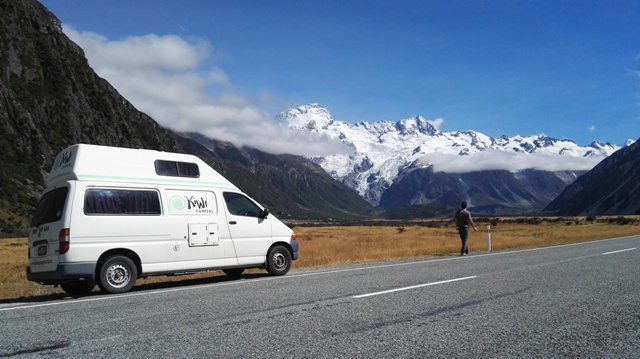
Burgos by campervan: romanesque, nature and a touch of western. A weekend route to discover monasteries, canyons and the Las Caderechas valley.
Key Points
- A route of Romanesque art and hidden monasteries
- Canyons, valleys and wild nature
- Visit Sad Hill, the famous spaghetti-western location
- Outstanding Castilian food along the way
A spectacular weekend combining nature, landscape, history, art and a visit to an emblematic place for Western fans and, more broadly, for any film lover. Let's head to Burgos!
We left Friday night from Madrid via the A1 to Aranda de Duero, taking exit 168 following signs to Gumiel Izán / Villanueva de Gumiel / Caleruega. At the roundabout we took the first exit onto the BU-912, then turned left onto the BU-910 and at the first roundabout took the first exit onto the BU-903. We arrived at the village of Santo Domingo de Silos, very famous for the Benedictine monastery of the same name.
We parked in the motorhome car park in the village, very spacious and comfortable. The truth is we were practically alone, probably because of the time of year — we went in March and it was still cold. This car park has a perfect location, just 5 km from the Sad Hill cemetery and close to Yecla. It's free, has no services, but turned out to be a very quiet spot.
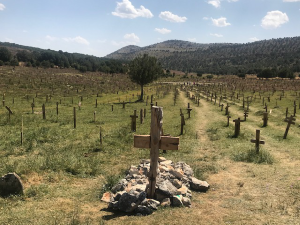
The first thing we did on Saturday after breakfast was visit the Sad Hill cemetery, 5 km away via the path to Contreras. It's a very easy walk and in just over an hour we were already at this iconic place where the finale of the famous film "The Good, the Bad and the Ugly" was filmed.
This famous Western by Sergio Leone was shot in 1966, starring Clint Eastwood, Eli Wallach and Lee Van Cleef and with the well-known music of Ennio Morricone. It's a cult film that has drawn thousands of fans and curious visitors to this place. The shooting of these films in the province of Burgos is not well known — it's commonly believed that spaghetti westerns were filmed in Almería.
"The Good, the Bad and the Ugly" was shot in four locations in Burgos province in the summer of 1966. There are still a few people who took part as extras in the film and it's very emotional to hear their memories. The interiors of the San Pedro de Arlanza monastery were transformed into an improvised hospital called San Antonio Mission. In Carazo, the Unionist fort of Betterville was built. The Arlanza river became the Rio Grande for the battle between Unionists and Confederates and, to top it off, the final duel between the three protagonists takes place at Sad Hill Cemetery, the film's true icon — a valley between Silos and Contreras in the village of Santo Domingo de Silos.
It was the Spanish Army that, in 1966, built the set of the huge cemetery with more than 5,000 graves in the Mirandilla Valley for the film's final scene. The place was completely abandoned after filming and forgotten for 49 years. Vegetation covered each grave, the crosses disappeared, time stopped — until the Sad Hill Cultural Association in 2016 reclaimed the cultural appeal of these landscapes that inspired Sergio Leone to shoot the film. Clint Eastwood almost attended the 50th anniversary of the filming, but in the end it didn't happen. It would have been a great achievement for this association that's recovering a mythical place, making the already interesting visit to this part of Burgos more complete.
We came back at lunchtime to Santo Domingo de Silos and ate at Mesón Casa de Guzmán — a combo plate of local products, good Ribera wine and a cuajada for dessert. Delicious. We were then ready to visit the Santo Domingo de Silos Monastery.
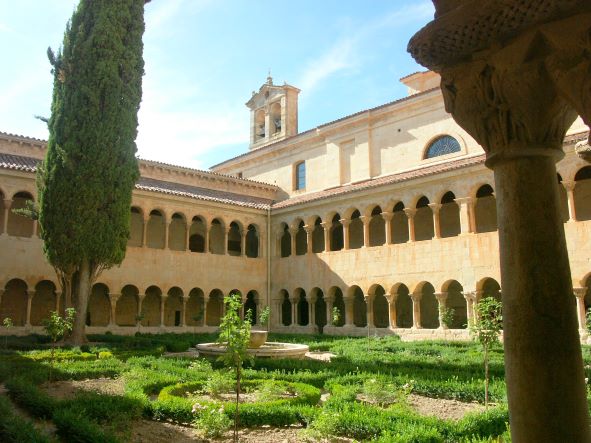
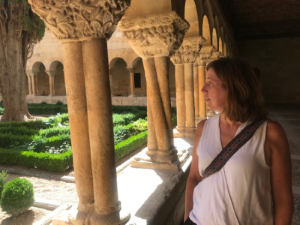
The Santo Domingo de Silos Monastery is a Benedictine abbey on the east side of the Tapadillo valley, belonging to the municipality of Santo Domingo de Silos in Burgos province. Today it's an active monastery — there are resident monks and it also hosts male guests who wish to undertake a few days of spiritual retreat. Of special beauty and renown is its cloister, very interesting from both an architectural and artistic point of view. Every day there are Masses sung in Gregorian chant and other liturgical offices such as matins, lauds and vespers.
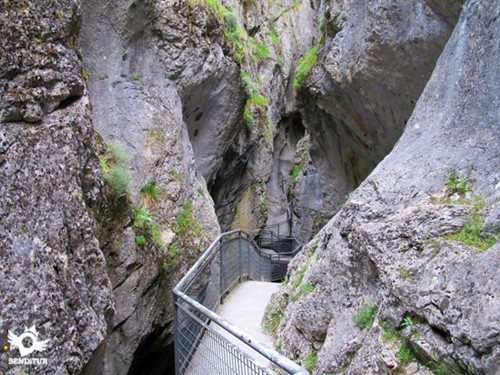
The next day we went to see the Yecla Gorge — a deep and narrow gorge carved into the thick limestone banks that characterise the relief of the Peñas de Cervera. It's a 500 m walk through a very special, unforgettable space. You can plan a 5 km route to reach this spectacular place. Access is via some stairs from the road. Yecla Gorge route
Very close to Yecla we can find one of the largest juniper groves on the planet, with trees over two thousand years old. The Spanish juniper or Juniperus Thurifera, which means "incense producer", is a prehistoric species. Besides junipers, we can find rebollos, holm oaks and gall oaks.
For bird lovers, it's a place where you can spot the Bonelli's eagle, the peregrine falcon, the sparrowhawk, goshawk and Egyptian vulture. A true ornithological reference.
To finish the trip we went to visit Covarrubias and, to get to know the village, what better than to have some tapas and let ourselves go. Covarrubias is a village of about 500 inhabitants with a lively cultural life. Many artists have decided to come live in this picturesque village and there's a certain bohemian atmosphere. It's considered one of the most beautiful villages in Spain, bathed by the river Arlanza, and its well-preserved medieval structure makes the visit a must.
Finally, it's worth remembering that mid-July hosts the Medieval Encounter and Cherry Festival. For those days, Covarrubias returns to the Middle Ages. The streets and all its inhabitants dress up to host the medieval market, where craftsmen from across the country gather and where the famous local cherries are sold. More than 15,000 people attend this medieval event every year.