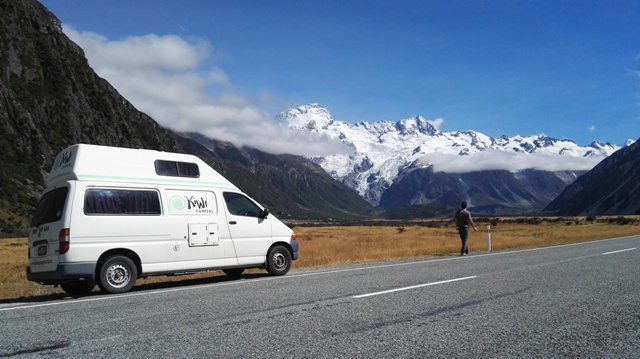
Everything you're looking for in one place: green coastline, mountains, gastronomy and historic villages. The Basque Country is a campervan paradise.
Key Points
- Green coast, mountains and food in a single trip
- San Sebastián, Bilbao and unique fishing villages
- Signposted routes and well-equipped camper areas
- Powerful landscapes any time of year
Natural landscapes, sport, gastronomy, culture, history, friendly people… where can you enjoy all of that on a trip of just one week? The answer is the Basque Country. There you'll find all this and much more. Go on, enjoy it by van!
DAY 1 AND 2 — VALENCIA – VALDEGOVÍA, 570 km
Just five and a half hours from Valencia is Villanueva de Valdegovía, a village in the province of Álava. Our plan is to spend a couple of days here and visit the climbing crag. We arrive mid-afternoon and look for a spot for the van. Just above the school there's a dead-end street that ends in a dirt track full of motorhomes and vans. You can see it on Google Maps.
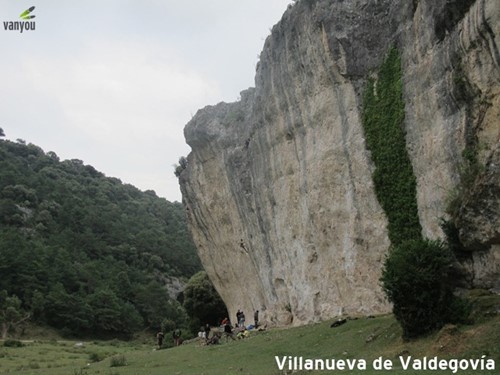
As always, be respectful with these spots so we can keep enjoying them. Since it's still early we head to the climbing crag. You have to take a track at the top of the village, next to the fountain and the tourist office. The track is well laid out and reaches the walls. It's forbidden to drive up to the routes under threat of hefty fines. Better to leave the car in the village and walk up. A very pleasant 20-minute stroll. The next day is for climbing. Very busy crag, with beautiful views and an ideal spot for hikes too. The village is very quiet and pleasant.
DAY 3 — VALDEGOVÍA – VITORIA-GASTEIZ, VITORIA-GASTEIZ – MONTE GORBEIA, 80 km
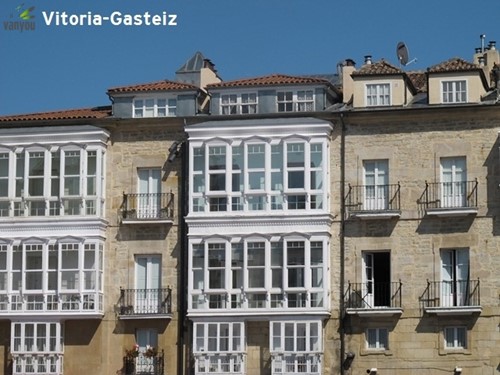
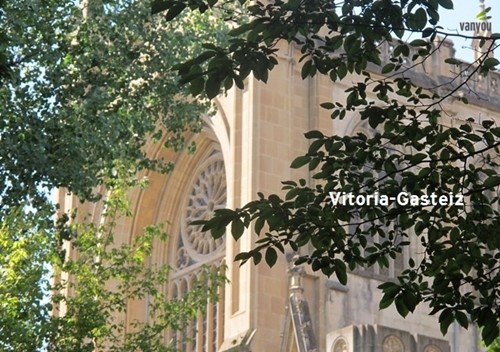
We head to Vitoria-Gasteiz to spend the day. We loved Vitoria, its old town, its calm… here's the link to the tourism page: http://www.vitoria-gasteiz.org
We recommend stopping by the tourist office and collecting information about visiting the city — there are several walking routes. You can also tour the city by bike, a good way to get to know it. One of those cities where you'd love to stay for a while.
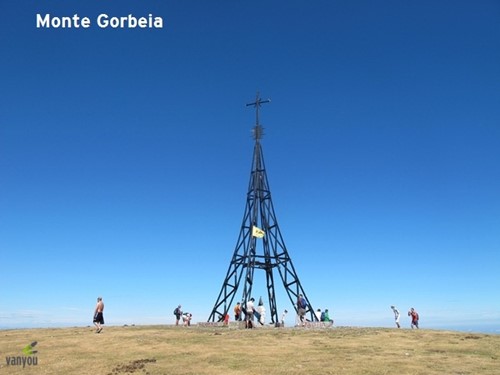
In the afternoon we head to Gorbeia Natural Park. Mt Gorbeia can be climbed from many sides; we chose to go via Pagomakurre. A beautiful drive with the van. At the end of the road where you leave the car to climb the mountain, it's a perfect spot to spend the night. We were alone — a luxury!
DAY 4 — MONTE GORBEIA – BILBAO – SAN JUAN DE GAZTELUGATXE, 80 km
The next day, ascent of the mountain. At 1,482 m high, it's an emblematic mountain for the Basques; the climb from here is very comfortable. At the summit there's an 18-metre cross. In the afternoon we decide to head to Bilbao. There's a van-friendly spot where we went to sleep: http://www.furgovw.org/index.php?topic=171134.0
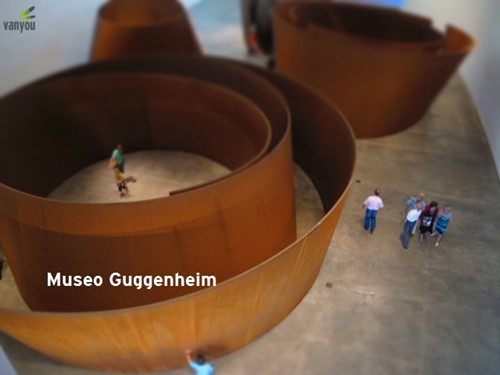
As they rightly say in the description, it's a van spot that's more practical than idyllic, but it was enough for us. If you're not comfortable with that option, you can also go to Bilbao's motorhome area: http://www.furgovw.org/index.php?topic=170062.0 We visited the Guggenheim, walked through the old town and, of course, went for pintxos!

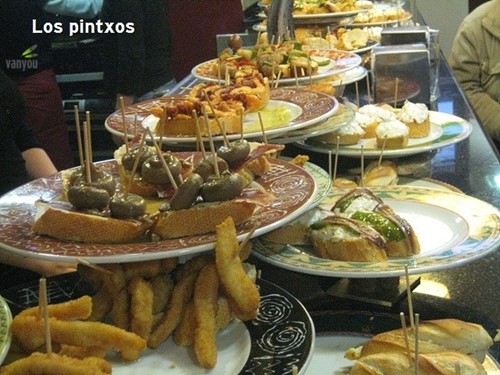
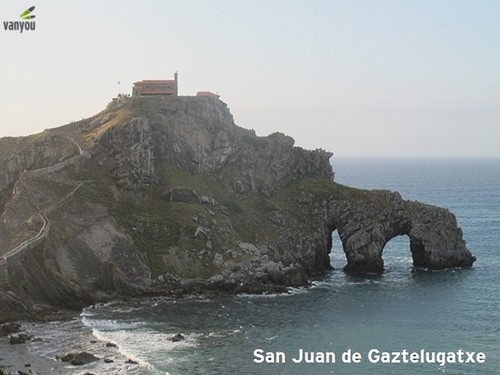
After the pintxos, on to San Juan de Gaztelugatxe, just over 35 km away. San Juan is a promontory connected to the mainland by a narrow bridge built over the rocks left between the island and the mainland, whose final access is 231 steps leading up to the hermitage.
There's a road that drops you just before the bridge going up to the hermitage; we parked up top where there's a restaurant and a wide parking area. From here a path leads to the hermitage. A beautiful spot where you feel the force of the wind coming from the sea. We decided to spend the night here, in the car park — there's a more secluded and quiet area where you'll surely find some other van or motorhome.
DAY 5 — SAN JUAN DE GAZTELUGATXE – GERNIKA – OMA FOREST, 45 km
Yesterday was the first contact with the coast. From here on, many options open up. Today we pass through Bermeo, a typical fishing town. We visit Mundaka beach, the surfers' Mecca, although it was impossible to park — in the middle of August you really notice the shift from inland to the coast in terms of crowds. Worth keeping in mind when planning where to visit.
It's worth stopping briefly at the Portuondo viewpoint or at La Atalaya. Our stop this morning will be at Sukarrieta beach. There's a very pleasant parking area perfect for the van and an ideal spot to spend the night — it's on the right-hand side of the road itself, and it's very big. You can leave the van here and walk to the beach (you may even be required to, as traffic is regulated since the beach car park is small), or try to park at the beach. We were lucky and found a spot. A very quiet beach with shaded area, picnic facilities and water fountain.
In the afternoon a visit to Gernika, a walk through its streets, the Peace Museum, the Tree of Gernika, the reproduction of Picasso's Gernica. There was a lot we didn't get to see, like the Casa de Juntas, as it was the town's festival and it was closed. In exchange, we enjoyed the aizkolaris (log cutters) and the harrijasotzaileak (stone lifters). Definitely a visit not to miss — a city loaded with history.
At the end of the day we head towards Oma Forest and the Santimamiñe caves, just about 15 km of road. We'll spend the night in the parking area, but not the one by the Lezika restaurant — rather in the one outside it but adjacent to that area. A very quiet place.
DAY 6 — OMA FOREST – LEKEITIO, 20 km
Our plan is to visit Oma Forest and then the Santimamiñe caves, both near the town of Kortezubi. The forest visit is free and has no opening hours. The cave visit, however, does. Our recommendation, if you're going to visit both: book the cave visit first and plan the forest around its schedule.
The cave visit costs €5; children up to 6 free. Guided tours run Tuesday to Sunday. The guided tour lasts an hour and a half and consists of climbing as a group to the cave entrance with a guide who gives you information about the natural environment. Once inside the cave, only the first 40 metres are visited, as for conservation reasons the rest of the cave remains closed. Back at the hermitage of San Mamés, via a sophisticated virtual replica with specific software, you can take a tour of the entire cave. Worth it!
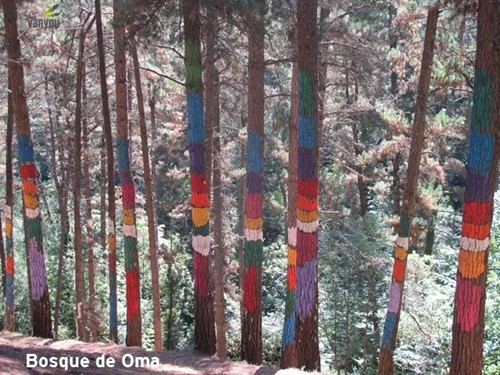
Without doubt, don't miss the Oma Forest. The painter and sculptor Agustín Ibarrola is the author of this wonder. The route starts at a sign next to the Lezika restaurant. You walk along a 2.5 km forest track. Once you reach the end of the track, you'll see a railing leading into the forest. There are two options to return: the same way, or — next to figure 19 — the exit from the forest towards the Oma valley. If you visit in summer, we recommend bringing water and, if you can, going early. We got very hot.
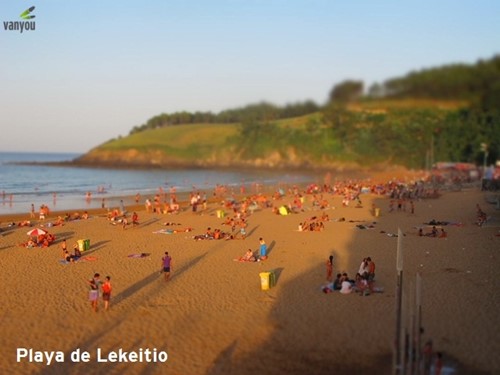
In mid-afternoon we set off for Lekeitio. It was packed with people, hard to find a spot to park. Late in the day, when people start leaving the beach, is the moment to find a spot for the night — and right on the beach itself, at the end of the road that ends in a dead-end roundabout next to the sand.
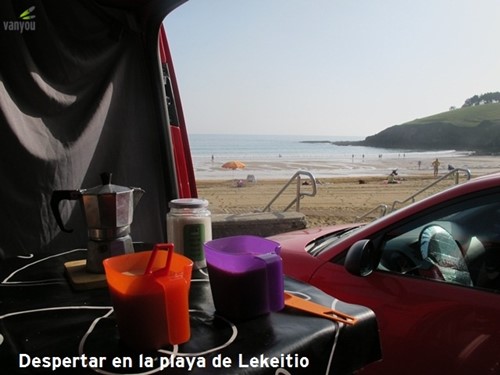
This place used to be a van-friendly spot; this year it no longer appears on the map of van-friendly spots, but a free motorhome area does appear: http://www.furgovw.org/index.php?topic=222076.0
A beautiful village with its fishing port, excellent pintxos and a spectacular beach.
DAY 7 — LEKEITIO – DONOSTI – TOLOSA, 100 km
We wake up on Lekeitio beach and the first thing we do is take a swim — the beach is empty! After breakfast, off to Ondarroa. Ondarroa is a fishing and cannery port. East of Ondarroa, Saturraran beach marks the boundary between the Bizkaia coast and that of Gipuzkoa, with spectacular views from the road down to the beach — definitely worth spending some time there.
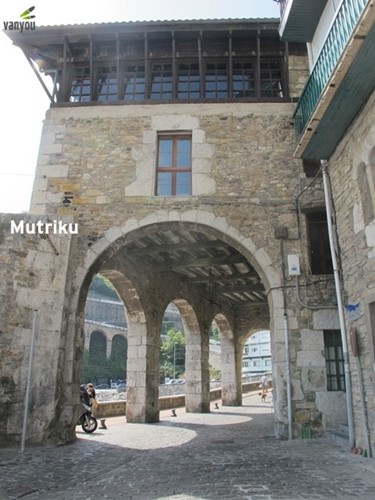
We move on and reach the town of Mutriku, beautiful! It's a lovely fishing town whose inhabitants once devoted themselves to whaling. The historic centre of Mutriku, declared a Monumental Site, is one of the best-preserved medieval villages in all of Gipuzkoa and the Basque Country. It has a magnificent natural pool where you can enjoy a good swim.
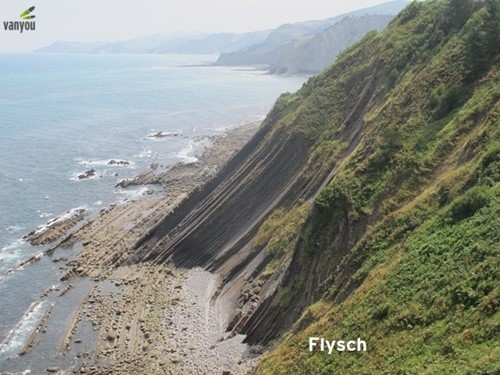
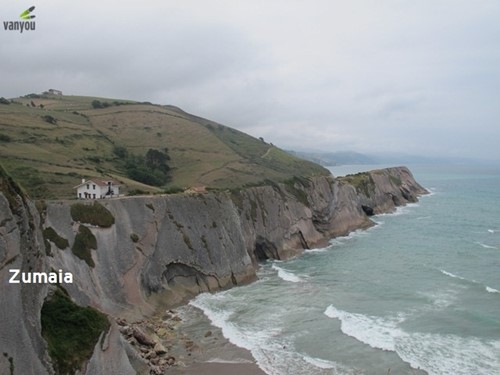
We're already deep into the FLYSCH area, which stretches from the Saturraran cliffs to almost the town of Zumaia. Flyschs are rock formations of sedimentary origin made up of alternating layers of hard rock (limestone, slate or sandstone) interspersed with softer ones (marls and clays). If you're interested in this incredible geological formation, ask about the Flysch Route. Along the coastal road there are spectacular viewpoints — don't miss them!
We arrive at Deba, part of the Basque Coast Geopark. On the coastline, you can enjoy a singular natural treasure, the impressive flysch outcrop. Inland, you'll find karstic valleys. Located at the mouth of the river Deba, it has two beautiful dark-sand beaches due to the nearby slate mountains.
We continue along the coast, looking for a place recommended at Mutriku's tourist office, called Sakoneta. You have to turn off the road to the left and, down a steep but paved slope, you arrive at a parking area with a restaurant and picnic zone next to it. From here a path leads, in about 20 minutes max, to a viewpoint where you can observe the Flysch — you can go down to the beach but be careful, it's a somewhat dangerous descent with ropes tied to the rock to help you.
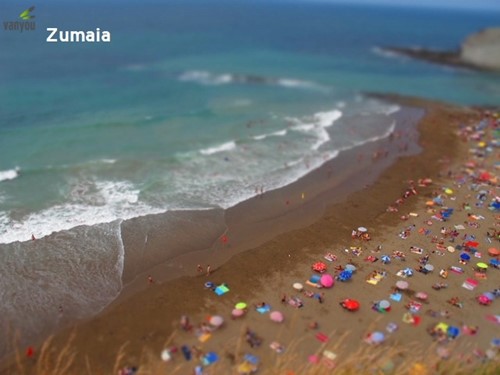
This place is very quiet, almost empty. From here to Zumaia is the end of the Flysch zone. Don't miss the viewpoint at the top of the village — impressive views of the cliffs and a curious view of the beach packed with umbrellas. It's hard to park in high season. From here our plan is to head directly to Donosti.
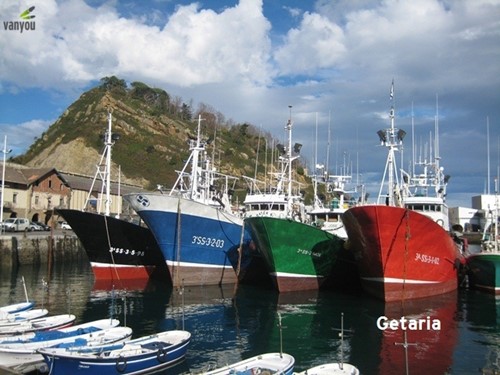
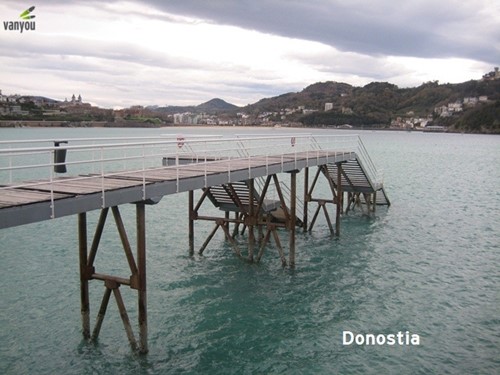
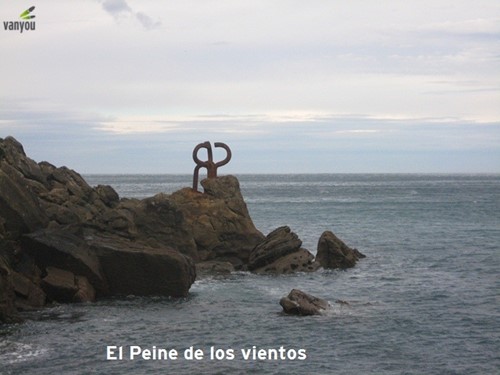
We'll pass through Getaria to visit its port and pintxos bars. We go through Zarautz. Finally we give in to Donosti — we know it well but we love it. We sample pintxos, take a walk through the old town and at night head to Tolosa. For those who don't know it, if you get the chance to visit, it's worth it. They've just opened a motorhome area, costs one euro and maximum stay is 72 hours, with electricity, water and dumping.
DAY 8 — TOLOSA – VALENCIA, 550 km
Time to head home. Our tour of Euskadi is over but we leave convinced we'll be back soon.
As always, we ask you to be respectful with the environment you visit — leave no trace, take all the waste you generate with you.