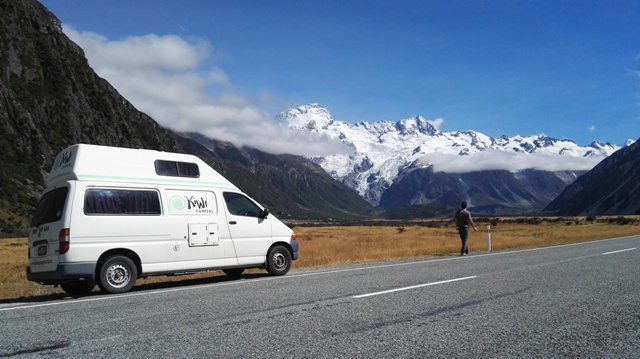
A new concept of campervan: Vanyou Ultimate combines comfort, technology and design for those who want a step up.
Key Points
- Our most complete model: hard top and indoor kitchen
- Five travel seats and two double beds
- Fresh and grey water tanks, parking heater
- Designed and tested by the Vanyou team
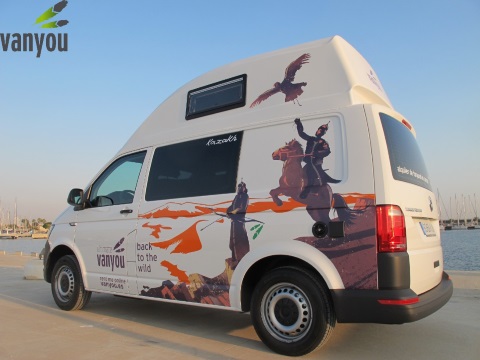
In February 2017 the Vanyou team finally fulfilled one of its long-cherished dreams: travelling to New Zealand and exploring it aboard a campervan. It was a fabulous experience that left us with wonderful memories. But we also came home with a few ideas in our heads. On our return we started mulling over a new campervan rental concept for our fleet. The project gradually took shape, not without difficulties — here we tell you the whole process.
The origin of the idea.
Beyond seeing how developed the campervan rental sector is over there — motorhomes, vans and even small minivans — one thing that caught our eye was that you barely see vehicles with pop-top roofs, which are so common here. Instead, they're usually fitted with rigid fibreglass roofs. It's true this fits a climate that's nothing like Spain's. Travelling in rain and wind makes a rigid roof almost a necessity.
The vehicle we rented was a Toyota Hiace van, the most common model there. The dimensions would be similar to a long-wheelbase Volkswagen Transporter. The van had a fibre over-roof installed with windows on both sides and a skylight on top. The van is designed for two people, so it only includes a double bed in the back. During the day you can reconfigure the bed structure to turn it into a lounge with two armchairs on either side of the table.
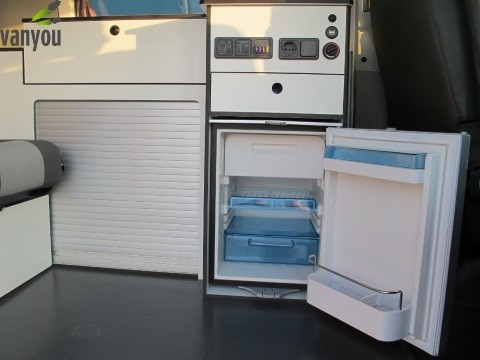
The equipment also includes a kitchen unit with drawers for utensils, a two-burner gas stove and a large fridge. It has a separate module with a sink and tap (50 litres). A small storage chest and a couple of overhead cabinets at the front and back, where we kept pillows and the duvet, complete the storage options.
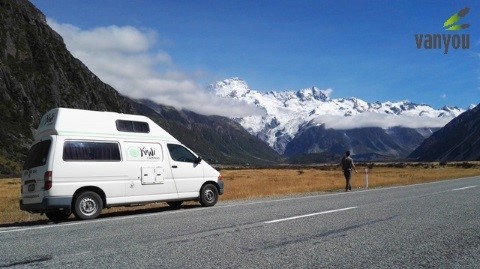
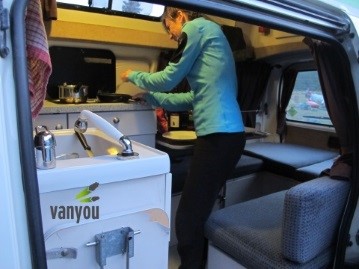
From the very first moment we realised how comfortable this layout was. The high roof gives a great sense of space and lets you stand up inside the vehicle at all times. The height of the units is designed so you can cook and wash up standing — really comfortable. The only downside we saw, thinking about Spanish use, was that you give up the ability to park in an underground car park, but realistically, how often do you park in a covered car park during a holiday trip? After three weeks living aboard we were convinced of how practical a vehicle with these features is, and an idea we hadn't considered until then settled in our heads: Would it be interesting to add a fixed-roof model to our fleet? Could we add to our standard equipment a kitchen unit with a small sink, so useful for being self-sufficient with our vehicle? How about a slightly bigger fridge?
A different concept.
Back home we started thinking about the new concept and analysing the different possibilities. We had to get something similar with a Vanyou! From the start we were clear we wanted a four-person model. The idea was to improve the pop-top, since we know winter is its weak point. Finally, we chose to stay in line with our Vanyou Standard and Vanyou Lite models and use the same base vehicle we've been working with all along: the Volkswagen Transporter.
The first option we evaluated was the high-roof configuration offered by Volkswagen. While the price could be interesting, it had some drawbacks: first, it forces you to choose the long-wheelbase configuration, meaning the vehicle would no longer be the same size as the other two formats. The height also doesn't allow for the upper bed. Another drawback is that you can't configure a rear tailgate. Conclusion: it wasn't a viable option.
Our second option was to keep the same van configuration and turn to the fibre roofs from German brand Reimo. That was another battle — in Spain these roofs aren't routinely fitted, so our fitters didn't have it easy to source one. The brand would sell them the roof but wouldn't ship it to Spain, so they had to find a carrier and overcome every obstacle. Finally, after a while of arranging things, good news! We could bring the roof over.
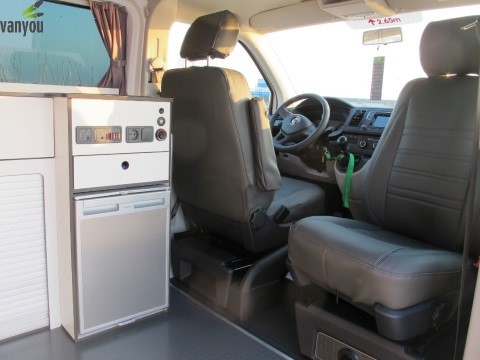
Bit by bit the project was taking shape. We were clear on the vehicle and the roof; now we had to redo the interior design. We were looking for a van with more comfort than the Vanyou Standard. The idea was to install a sink so you could wash up inside. We wanted to raise the height of the units to improve comfort, and we were also looking for a bigger fridge and installing fresh and grey water tanks.
Basically, it was starting the design over from scratch, like when we designed our first Standard van — a real garden of uncertainties!
Lots of ideas were coming to mind but they all had to fit together. We started the first sketches on the computer, until we finally came up with the most practical solution for a unit destined for rental. Something simple, as we've always liked, but with all the details.
The configuration we wanted was already clear:
- Rigid roof, turning the van into a camper 2.65 m tall
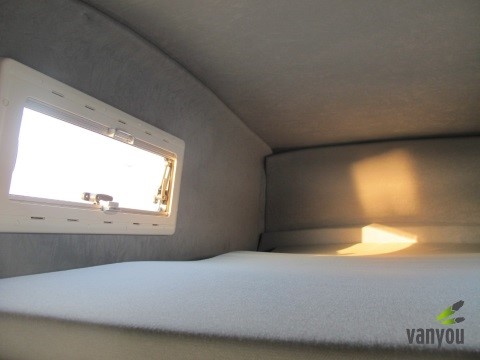
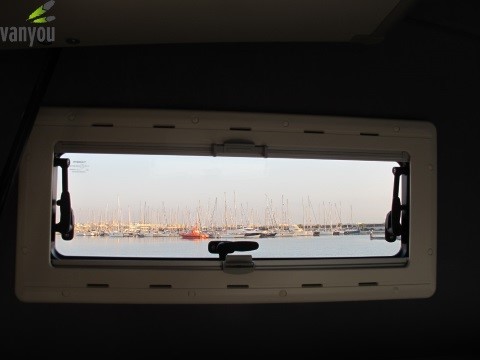
- Two windows on the sides of the roof
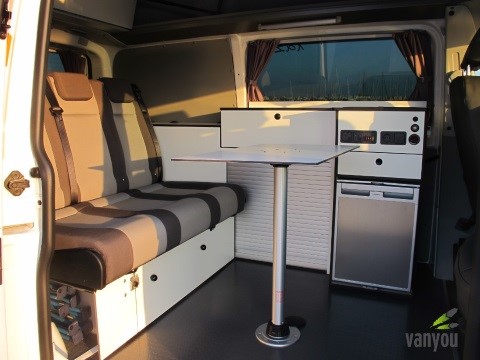
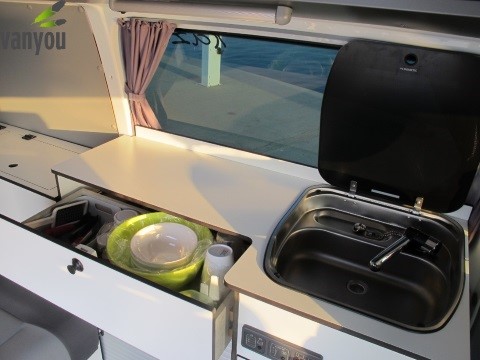
- High units allowing you to cook and wash up standing
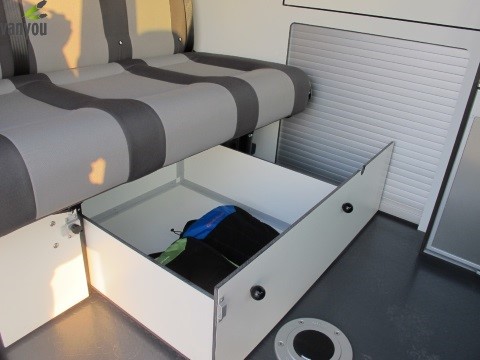
- Bed-seat with three travel positions.
- Drawers to increase storage capacity.
- 65-litre fresh water tank with external connection and shower hookup.
- 30-litre grey water tank with drain.
- Sink for washing up inside.
- Five travel seats in total.
- Two double beds
- 50-litre compressor fridge.
- Swivel front seats.
- Parking heater.
The process
The goal was to have the vehicle available for the 2018 season, so we got the whole machine in motion. We had to buy the vehicle, order the roof and bed-seat, build the unit, buy the fridge, choose the sink, etc. On paper, all clear.
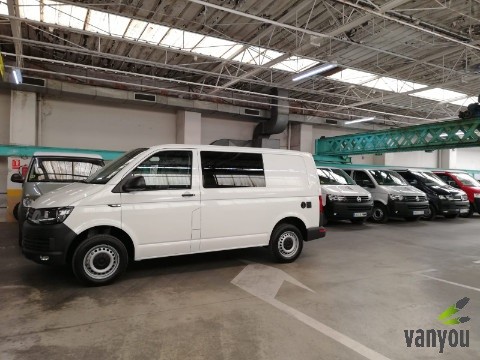
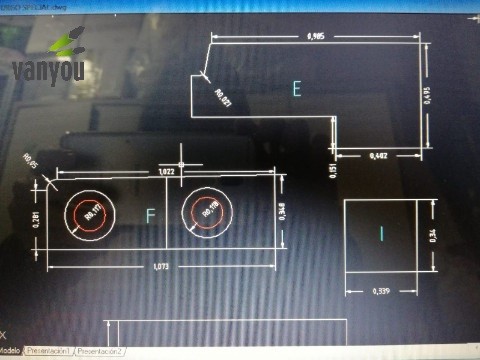
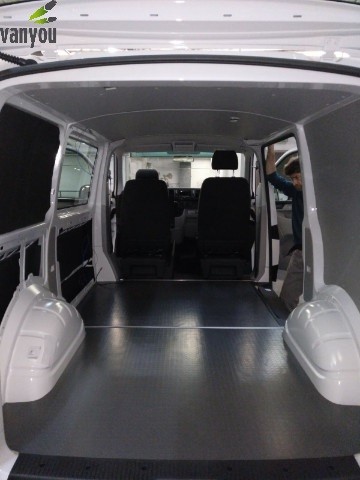
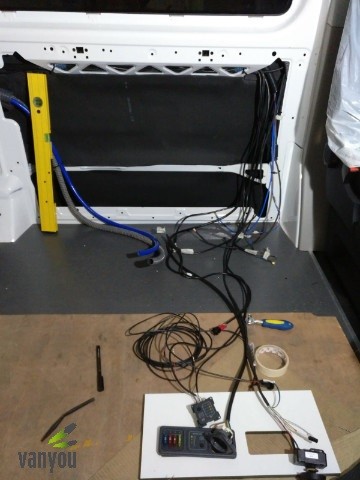
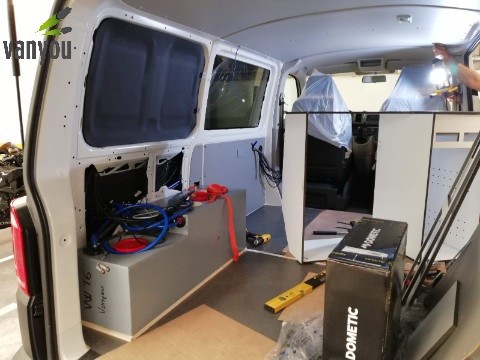
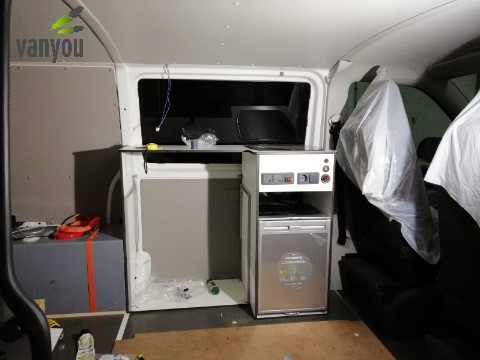
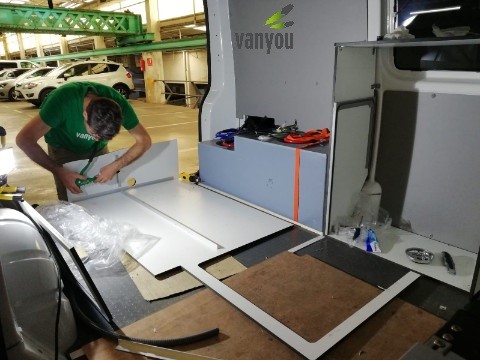
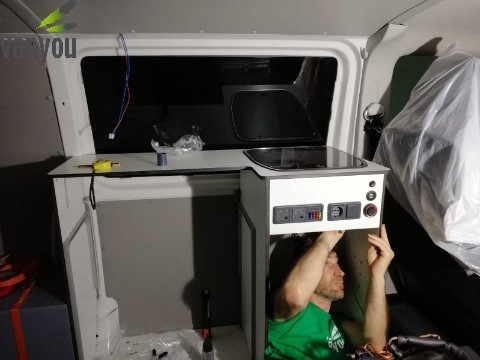
What we didn't imagine was that everything was going to get so complicated. The vehicle was delayed by internal issues at the brand. The design of the unit's parts got complicated and we had to make three attempts before the pieces fit. The installation was also a torture — many things were new to us and everything was going wrong...
To complicate matters further, the roof and the seat weren't arriving in Spain and the delay was building up. Fortunately, in the end we managed to turn the situation around. We could leave the unit installed and the roof finally arrived along with the bed-seat.
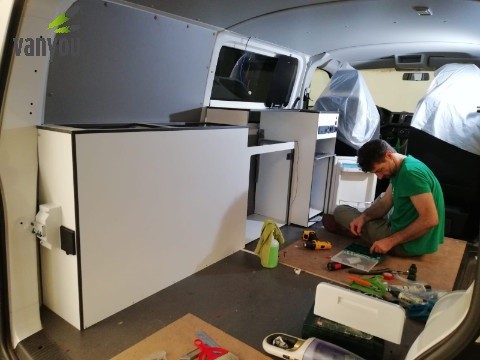
Meanwhile the design of the van's livery was coming along. From the start we thought of an illustration inspired by the tribes of Mongolia, but it was hard to find a name we liked. Our designer went for innovation and came up with a proposal that left us speechless — he nailed it from the start, a design with printed vinyl combined with cut vinyl.
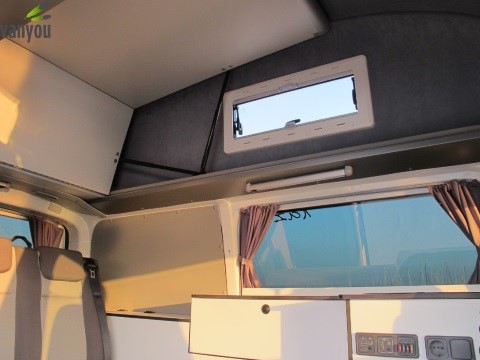
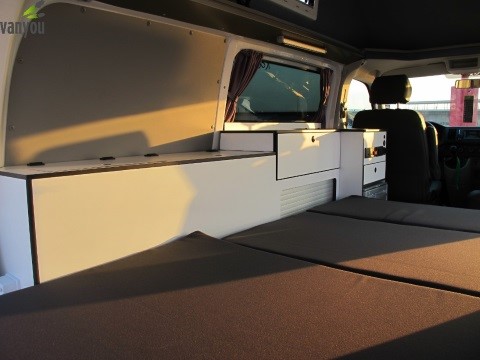
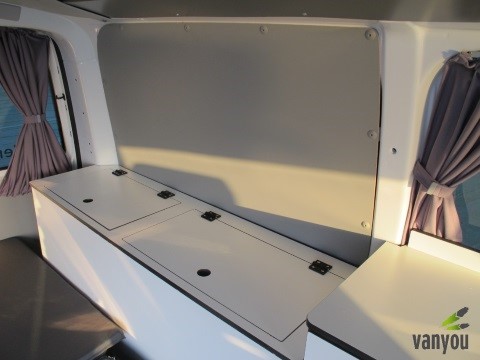
We were on the home stretch, but we'd still have another setback. When we took the van to our fitter to install the roof and he saw the units, he warned us we might have problems with type approval. With high units and rear travel seats, it was possible the lab would reject the project.
It felt like a bucket of cold water — frozen, we'd say. All our effort, suffering and excitement could come to nothing. It was two and a half pretty agonising weeks with no response from the lab, but in the end, it all worked out!
All that was left was the last step: approval by the ITV (vehicle inspection). In principle something straightforward our fitter could handle, but, another problem — with the accumulated delay, he was closing for holidays and couldn't take care of it. In principle no big deal, we'd do it ourselves in Valencia at the ITV station where we usually take the vehicles.
With the van finished and all the project documentation, in principle it would be a mere formality, but no! They'd just changed the procedure and now it was much more demanding and, worse, lengthy. We were on the seventh of July and it could take us another ten days. We had to fight hard, and shed a tear or two as well, to get things moving and finally obtain the approval on time.
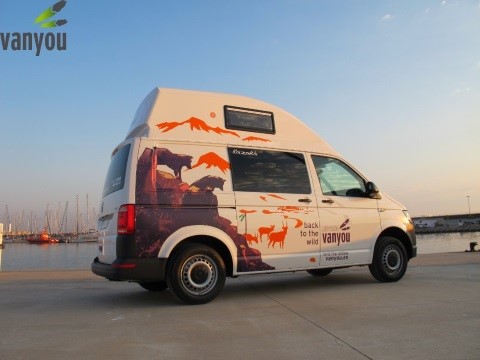
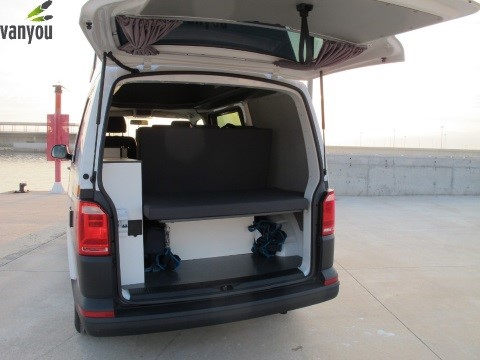
So in the end we did it: our new format, which we've called Vanyou Ultimate, is a reality and our Kazakh van is ready to hit the road. We've put all our effort and excitement into this project, convinced that it's a format that's unique in today's campervan rental world. We hope you like it and get to enjoy it.