
Poble Nou de Benitatxell and Cala del Moraig: two of the most photogenic secrets on the Costa Blanca, ideal for a slow campervan stop.
Key Points
- Poble Nou de Benitatxell, a Mediterranean white village
- Cala del Moraig and Cova dels Arcs
- The spectacular Falla del Moraig route
- A must-stop on the northern Costa Blanca
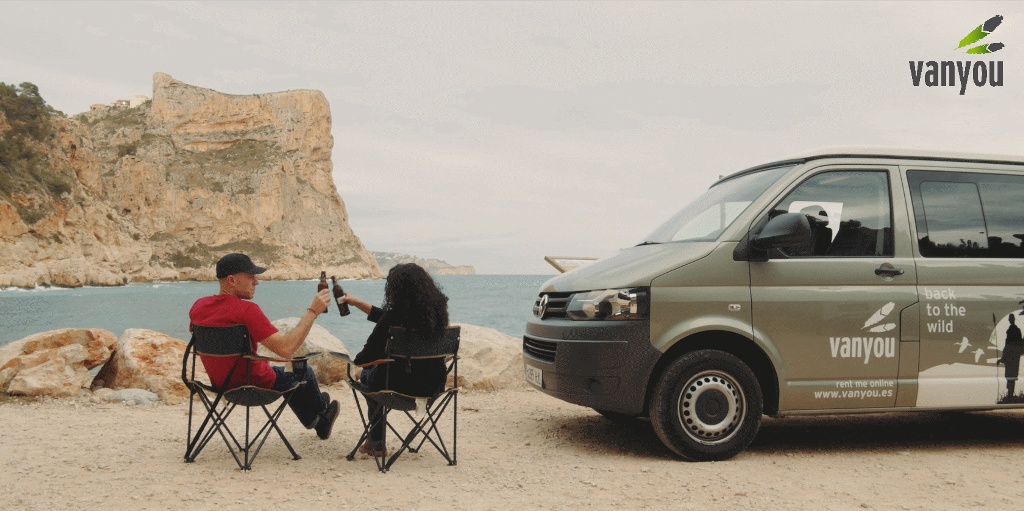
Join us to tour in a Vanyou every corner of the Costa Blanca. We'll enjoy its beaches but also do hikes, and we'll take you aboard our van to magical spots. We're heading to Poble Nou de Benitatxell!
Just 1 hour 30 minutes from Valencia, you'll find this little village, home to the quintessential cove: we're talking about Cala del Moraig. Cliffs, unique views and breathtaking sunrises mean you can't drive past, and you'll want to discover this little piece of the Costa Blanca.
Despite the construction of housing developments with hundreds of villas that affect its beauty, Poble Nou de Benitatxell has the charm of being in a privileged setting on the Costa Blanca. You'll certainly enjoy your two-day stay. But with more time, you can combine it with visits to nearby towns such as Xàbia, Dénia, Moraira, Benissa, Calpe or Altea, among others.
The Costa Blanca is the tourist name for the Mediterranean coast of the Alicante province. Between the municipalities of Dénia and Pilar de la Horadada, it has 244 km of sandy beaches, beautiful coves and spectacular cliffs. The municipalities included are: Dénia, Xàbia, Poble Nou de Benitatxell, Teulada-Moraira, Benissa, Calpe, Altea, Alfàs del Pi, Benidorm, Finestrat, La Vila Joiosa, Campello, Alacant, Elx, Sant Pola, Guardamar del Segura, Torrevella, Orihuela Costa and Pila de la Horadada.
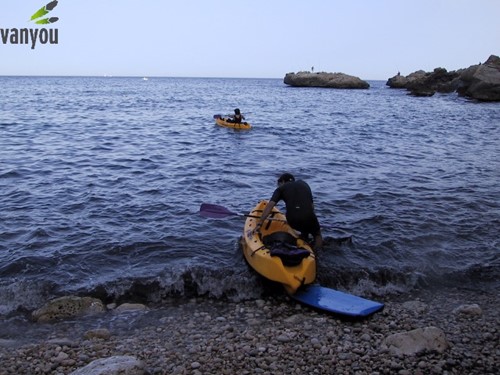
Poble Nou de Benitatxell borders Xàbia to the north and Teulada-Moraira to the south. What can you do? Enjoy the sun in its coves, snorkel and dive, swim, kayak along the coast, do some hiking, cycling, climbing and base jumping. Don't forget to pack diving goggles, a snorkel and water shoes.
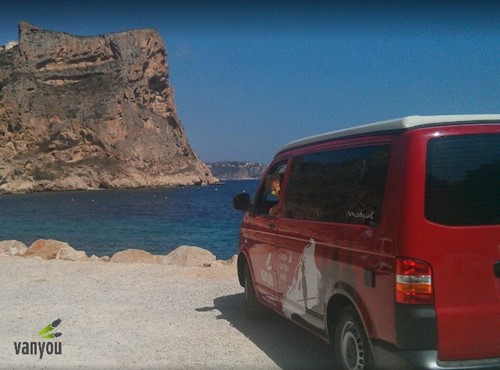
Let's discover its coves. Since Poble Nou de Benitatxell is surrounded by cliffs, these coves can only be accessed from land. From north to south:
- Cala dels Testos: at the foot of Morro Falquí, an imposing rock wall. This isolated cove can only be accessed after a hike, by swimming or by boat, making it a unique spot. Due to its inaccessibility, we don't recommend visiting this cove by land for everyone, but we explain below how to get there. You can also access by swimming from Cala del Moraig, although bear in mind that the one-way swim is about 400 metres. There are no services at the cove, so don't forget to bring everything you need.
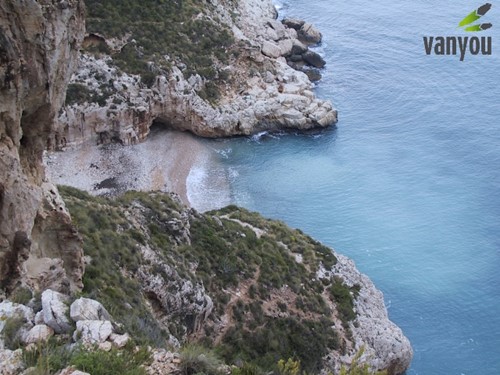
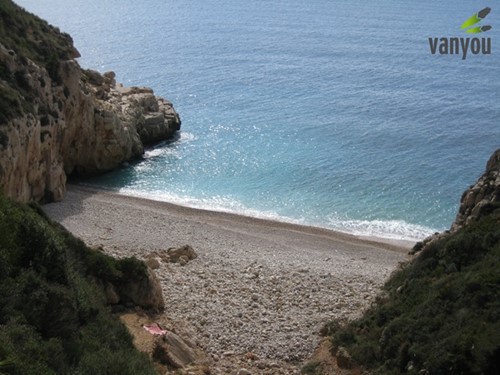
- Cala del Moraig: the first time we visited this cove, Google Maps didn't exist and we really struggled to find it. To get there you have to cross a swarm of urbanisation streets and that's when you realise the horror of brick and concrete. But when you arrive and have the cove before you, you're speechless. So when you discover it, you'll know what we're talking about. Cala del Moraig is a pebble beach, framed to the north by Morro Falquí, and to the south by Cova del Arcs, famous for its freshwater spring and for the expert divers who go inside. There's parking up top and another by the cove itself. The force of the swells in storms has more than once washed the parking away.
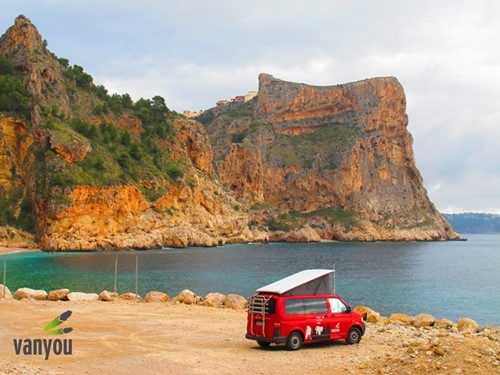
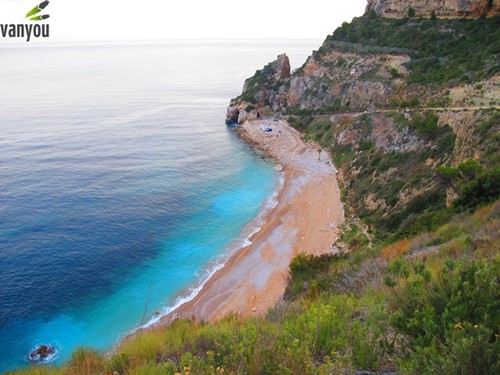
- Cala del Llebeig: another cove only accessible by hike — which has the advantage of being little-visited. This cove is another wonderful corner, with just a few fishermen's huts. Don't forget to bring water, sun protection and appropriate footwear, as there are no services here.
Excursions:
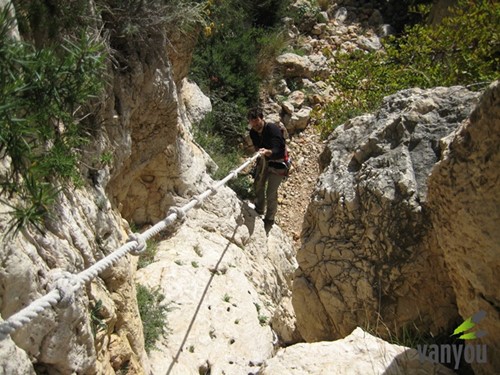
- Excursion to Cala dels Testos: as mentioned above, to reach this cove there's a route of about 30 minutes each way, around 500 metres distance with scrambles. Not suitable for everyone, as it descends the Barranc de l'Infern with three vertical sections where you must use fixed ropes. Bear this in mind for the return as well. Before reaching Cala dels Testos you can stop at Cova dels Testos and enjoy incredible views.
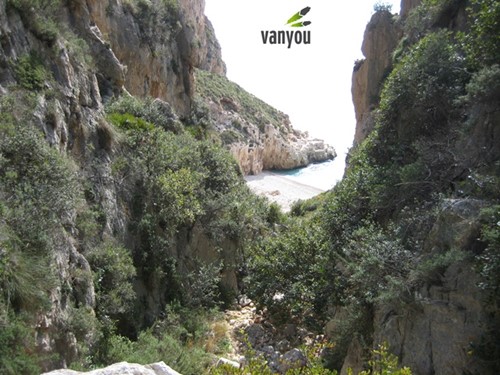
- Cliff route SL-50, between Cala del Moraig and Cala del Llebeig: this route is linear — you can start at either spot. The car park at Cala del Llebeig is smaller than at Moraig. Walking the 2 km one-way will take you about 2 hours return. Also not recommended for all audiences. For those who do it, you need to be careful in some sections and bring water and appropriate footwear. Along the way you'll pass caves where fishermen and farmers used to shelter and enjoy beautiful views.
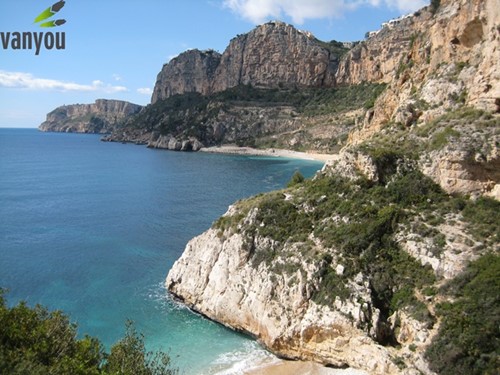
- Cova dels Arcs, Falla del Moraig, La Vasenilla: at Cala del Moraig you'll be able to admire Cova dels Arcs. On calm days, from inside you can see the rays of light coming through its arches. The cave has an opening in the upper part and, walking south, a small path takes you to Falla del Moraig, an almost vertical cut in the rock that lets light into a cave only accessible from the sea — the underwater entrance to the Riu Blanc. A few metres from the fault you'll find Vasenilla, a circular sinkhole with vertical walls connected to the sea. This short 300-metre route is low difficulty and will take you about 30 minutes.
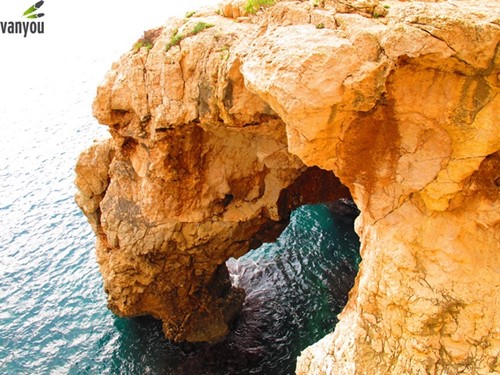
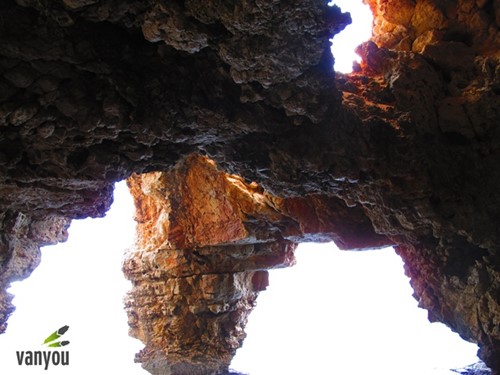
- Climbing: at Morro Falquí is the famous 170-metre climbing route, Vía Sonjannika 6a+ — we can give you detailed information. Climbing here won't leave you indifferent; the setting is unique.
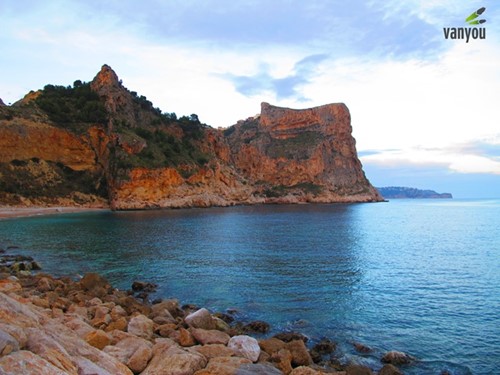
Viewpoints:
- Viewpoint over Cala del Moraig (at the end of Hernán Cortés street).
- Viewpoint between Cala dels Testos and Moraig, from the upper car park of Cala del Moraig — by foot you can reach two roundabouts that serve as viewpoints.
- Cliff route viewpoint or Morro del Bou.
- Cala del Llebeig viewpoint (accessible on foot from the cliff route).
- Cim del Puig Llorença viewpoint, the emblematic mountain of Poble Nou de Benitatxell, famous because the Vuelta a España cycling race has finished stages here. From its summit you can see, among others, the Peñón de Ifach and sometimes Ibiza.
- Viewpoint of Poble Nou de Benitatxell village.
Cultural points of interest:
- A visit to the village's old town.
- The Riuraus (old structures to shelter raisin grapes).
- Pous de l'Albiar, a network of wells and underground cisterns of possibly Arab origin.
For overnight stays: unfortunately there's currently no camper area or campsite in the area. Ask us and we'll provide information.
As always, we ask you please to be respectful with the environment you visit — leave no trace, take all the waste you generate with you.
We've tried to summarise what we think is essential on your visit to Poble Nou de Benitatxell, but there's obviously more. So go discover it and tell us when you're back!
Don't miss this little piece of the Costa Blanca — and what better way to do it than with your Vanyou.
Recent content
Dolomites
21 ene 2026
Albarracín bouldering
21 ene 2026
The best of Italy by van
21 ene 2026
Croatia by campervan in 21 days
21 ene 2026
New Zealand
21 ene 2026Newsletter VanYou
Get the best camper tips in your inbox.